

Section 10: Understanding Risk in Options
Maximum risk and reward - Probability of profit - Importance of position sizing
BEGINNER LEVEL
10/11/202510 min read
In options trading, understanding and managing risk is even more crucial than understanding strategy. The power of leverage, while offering magnified returns, also comes with magnified potential losses if not managed carefully. This section will equip you with a deeper appreciation for risk, beyond just the maximum loss of a trade.
1. Maximum Risk and Reward: Knowing Your Boundaries
For every options strategy, it's paramount to clearly define the maximum possible loss and the maximum possible gain before you enter the trade. We briefly touched on this with our basic strategies, but let's reinforce its importance.
Maximum Risk: This is the absolute most money you can lose on a specific trade.
For Option Buyers (Long Calls/Puts): Your maximum risk is always limited to the premium you paid. This is why buying options is often attractive to beginners – your downside is clearly defined and capped.
For Option Sellers (e.g., Short Covered Calls): Your maximum risk on the option is limited to the potential unrealized loss on the underlying stock you own, minus the premium received. For naked options (which beginners should avoid), the risk can be theoretically unlimited.
Maximum Reward: This is the absolute most money you can make on a specific trade.
For Option Buyers (Long Calls/Puts): This can be unlimited (for calls) or substantial (for puts, capped at the strike price minus the premium, as stock can only go to zero).
For Option Sellers (e.g., Short Covered Calls): Your maximum reward is typically limited to the premium received plus the difference between your cost basis of the stock and the strike price (if the stock is called away).
Why is this important? Knowing your maximum risk helps you determine if a trade aligns with your risk tolerance. Never enter a trade where the maximum potential loss would cause significant financial hardship or undue stress. Knowing your maximum reward helps you assess if the potential gain is worth the risk you're taking.


2. Probability of Profit: What Are Your Odds?
Beyond just the maximum risk and reward, a sophisticated options trader also considers the probability of profit. This refers to the likelihood that a particular options trade will expire with a profit.
How it works (Simplified): The probability of profit is often estimated by looking at the option's moneyness and time to expiration, and more accurately using options pricing models (which we'll cover later).
Out-of-the-Money (OTM) Options: These options, by definition, have no intrinsic value. For an OTM option to be profitable at expiration, the underlying stock must move significantly in the desired direction. Therefore, buying OTM options generally has a lower probability of profit.
In-the-Money (ITM) Options: These options already have intrinsic value. For an ITM option to be profitable, the stock doesn't need to move as much, or might even move slightly against you. Buying ITM options generally has a higher probability of profit than OTM options, but they are also more expensive.
At-the-Money (ATM) Options: These are often considered to have roughly a 50/50 chance of ending up ITM or OTM by expiration, but due to time decay, the actual probability of profit for a bought ATM option is usually less than 50%.


Impact on Buyers vs. Sellers:
Option Buyers: When you buy an option (long call or put), you typically have a lower probability of profit (especially for OTM options). You need the stock to move significantly and in the right direction to overcome time decay and the premium paid.
Option Sellers: When you sell an option (short call or put), you generally have a higher probability of profit. You profit if the option expires worthless, which happens if the stock stays below the strike (for short calls) or above the strike (for short puts) at expiration. Many options expire worthless, making this a statistically favorable position if managed correctly. However, the risk of loss for sellers is often much greater (and potentially unlimited) if the trade moves against them.
Why is this important? Understanding probability of profit helps you make more realistic assessments of your trading edge. Strategies with high potential reward often have low probabilities of success, and vice-versa. It's a key factor in aligning your strategy with your risk appetite and overall trading goals.
3. Importance of Position Sizing: Don't Bet the Farm!
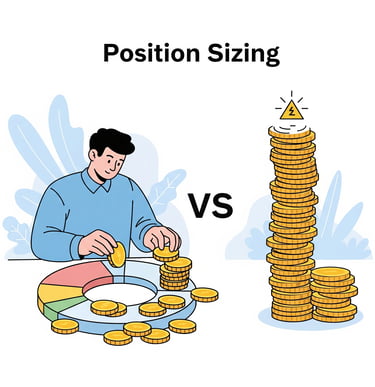
Perhaps the most critical aspect of risk management, and one often overlooked by beginners, is position sizing. This refers to how much capital you allocate to any single trade or strategy.
The Golden Rule: Never commit too much of your trading capital to one trade.
Why it's crucial:
Protects Your Capital: Even if you have a high-probability strategy, any single trade can lose. By sizing your positions correctly, one or two losing trades won't wipe out your entire account.
Manages Emotional Impact: Losing 5% of your account on a trade is much easier to recover from, both financially and psychologically, than losing 50%. Proper position sizing helps you stay disciplined and avoid emotional trading.
Allows for Learning: Especially as a beginner, you will make mistakes. Small positions allow you to learn from these mistakes without devastating consequences.
Enables Consistency: Consistent profits over time come from consistent application of your strategy with appropriate risk. Large, inconsistent bets often lead to ruin.
How to Determine Position Size (General Guidelines, not specific advice):
Define Max Loss per Trade: A common rule of thumb is to risk no more than 1-2% of your total trading capital on any single trade. This means if your trading account is $10,000, you should aim for a maximum loss of $100-$200 per trade.
Calculate Number of Contracts: Once you know your maximum risk per trade, you can determine how many option contracts you can afford.
Number of Contracts = (Max Risk per Trade) / (Max Loss per Contract)
Example: If your max risk per trade is $200, and a long call option costs $2.00 ($200 per contract), you can afford to buy only 1 contract ($200 / $200 = 1). If the max loss per contract was $100 (premium $1.00), you could buy 2 contracts.
Consider Volatility: In highly volatile markets or with highly volatile stocks, you might want to use even smaller position sizes.
Example of Poor vs. Good Position Sizing:
Poor Sizing: You have a $5,000 trading account. You decide to buy 10 XYZ call options, each costing $2.00 ($200 per contract). Total cost: $2,000. If the options expire worthless, you lose $2,000, or 40% of your account. One bad trade could effectively end your trading journey.
Good Sizing: You have a $5,000 trading account. You decide to risk 2% per trade, which is $100. You find an XYZ call option that costs $1.00 ($100 per contract). You buy 1 contract. If it expires worthless, you lose $100, or 2% of your account. You can easily recover from this and learn from the experience.
Position sizing is your ultimate risk control. No matter how good a strategy sounds, without proper position sizing, you put your entire trading capital at risk.
In options trading, understanding and managing risk is even more crucial than understanding strategy. The power of leverage, while offering magnified returns, also comes with magnified potential losses if not managed carefully. This section will equip you with a deeper appreciation for risk, beyond just the maximum loss of a trade.
For every options strategy, it's paramount to clearly define the maximum possible loss and the maximum possible gain before you enter the trade. We briefly touched on this with our basic strategies, but let's reinforce its importance.
Maximum Risk: This is the absolute most money you can lose on a specific trade.
For Option Buyers (Long Calls/Puts): Your maximum risk is always limited to the premium you paid. This is why buying options is often attractive to beginners – your downside is clearly defined and capped.
For Option Sellers (e.g., Short Covered Calls): Your maximum risk on the option is limited to the potential unrealized loss on the underlying stock you own, minus the premium received. For naked options (which beginners should avoid), the risk can be theoretically unlimited.
Maximum Reward: This is the absolute most money you can make on a specific trade.
For Option Buyers (Long Calls/Puts): This can be unlimited (for calls) or substantial (for puts, capped at the strike price minus the premium, as stock can only go to zero).
For Option Sellers (e.g., Short Covered Calls): Your maximum reward is typically limited to the premium received plus the difference between your cost basis of the stock and the strike price (if the stock is called away).
Why is this important? Knowing your maximum risk helps you determine if a trade aligns with your risk tolerance. Never enter a trade where the maximum potential loss would cause significant financial hardship or undue stress. Knowing your maximum reward helps you assess if the potential gain is worth the risk you're taking.
Beyond just the maximum risk and reward, a sophisticated options trader also considers the probability of profit. This refers to the likelihood that a particular options trade will expire with a profit.
How it works (Simplified): The probability of profit is often estimated by looking at the option's moneyness and time to expiration, and more accurately using options pricing models (which we'll cover later).
Out-of-the-Money (OTM) Options: These options, by definition, have no intrinsic value. For an OTM option to be profitable at expiration, the underlying stock must move significantly in the desired direction. Therefore, buying OTM options generally has a lower probability of profit.
In-the-Money (ITM) Options: These options already have intrinsic value. For an ITM option to be profitable, the stock doesn't need to move as much, or might even move slightly against you. Buying ITM options generally has a higher probability of profit than OTM options, but they are also more expensive.
At-the-Money (ATM) Options: These are often considered to have roughly a 50/50 chance of ending up ITM or OTM by expiration, but due to time decay, the actual probability of profit for a bought ATM option is usually less than 50%.
Impact on Buyers vs. Sellers:
Option Buyers: When you buy an option (long call or put), you typically have a lower probability of profit (especially for OTM options). You need the stock to move significantly and in the right direction to overcome time decay and the premium paid.
Option Sellers: When you sell an option (short call or put), you generally have a higher probability of profit. You profit if the option expires worthless, which happens if the stock stays below the strike (for short calls) or above the strike (for short puts) at expiration. Many options expire worthless, making this a statistically favorable position if managed correctly. However, the risk of loss for sellers is often much greater (and potentially unlimited) if the trade moves against them.
Why is this important? Understanding probability of profit helps you make more realistic assessments of your trading edge. Strategies with high potential reward often have low probabilities of success, and vice-versa. It's a key factor in aligning your strategy with your risk appetite and overall trading goals.
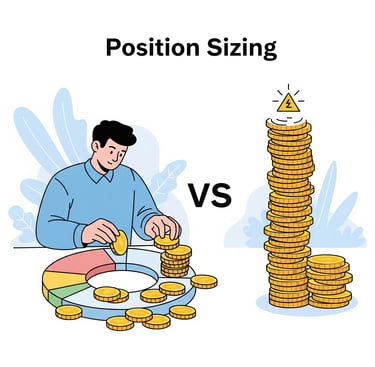
Perhaps the most critical aspect of risk management, and one often overlooked by beginners, is position sizing. This refers to how much capital you allocate to any single trade or strategy.
The Golden Rule: Never commit too much of your trading capital to one trade.
Why it's crucial:
Protects Your Capital: Even if you have a high-probability strategy, any single trade can lose. By sizing your positions correctly, one or two losing trades won't wipe out your entire account.
Manages Emotional Impact: Losing 5% of your account on a trade is much easier to recover from, both financially and psychologically, than losing 50%. Proper position sizing helps you stay disciplined and avoid emotional trading.
Allows for Learning: Especially as a beginner, you will make mistakes. Small positions allow you to learn from these mistakes without devastating consequences.
Enables Consistency: Consistent profits over time come from consistent application of your strategy with appropriate risk. Large, inconsistent bets often lead to ruin.
How to Determine Position Size (General Guidelines, not specific advice):
Define Max Loss per Trade: A common rule of thumb is to risk no more than 1-2% of your total trading capital on any single trade. This means if your trading account is $10,000, you should aim for a maximum loss of $100-$200 per trade.
Calculate Number of Contracts: Once you know your maximum risk per trade, you can determine how many option contracts you can afford.
Number of Contracts = (Max Risk per Trade) / (Max Loss per Contract)
Example: If your max risk per trade is $200, and a long call option costs $2.00 ($200 per contract), you can afford to buy only 1 contract ($200 / $200 = 1). If the max loss per contract was $100 (premium $1.00), you could buy 2 contracts.
Consider Volatility: In highly volatile markets or with highly volatile stocks, you might want to use even smaller position sizes.
Example of Poor vs. Good Position Sizing:
Poor Sizing: You have a $5,000 trading account. You decide to buy 10 XYZ call options, each costing $2.00 ($200 per contract). Total cost: $2,000. If the options expire worthless, you lose $2,000, or 40% of your account. One bad trade could effectively end your trading journey.
Good Sizing: You have a $5,000 trading account. You decide to risk 2% per trade, which is $100. You find an XYZ call option that costs $1.00 ($100 per contract). You buy 1 contract. If it expires worthless, you lose $100, or 2% of your account. You can easily recover from this and learn from the experience.
Position sizing is your ultimate risk control. No matter how good a strategy sounds, without proper position sizing, you put your entire trading capital at risk.
1. Maximum Risk and Reward: Knowing Your Boundaries

2. Probability of Profit: What Are Your Odds?
3. Importance of Position Sizing: Don't Bet the Farm!