

Section 12: Selling Covered Calls
Generating Income (Covered Call)
2/1/20262 min read
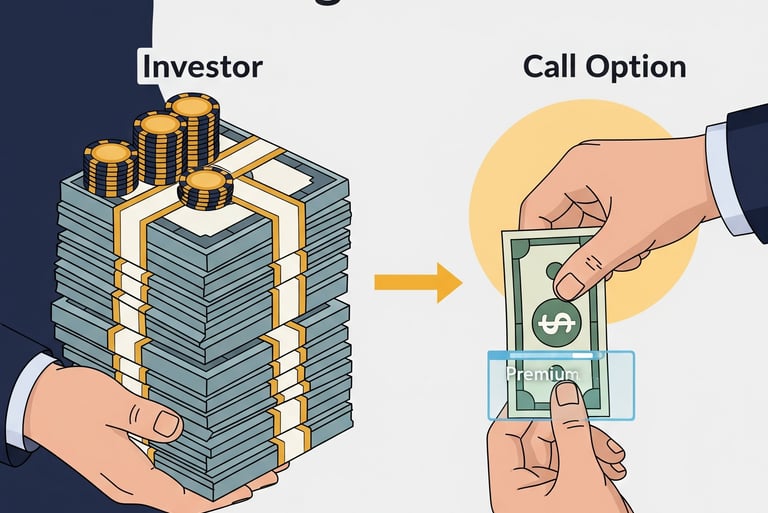
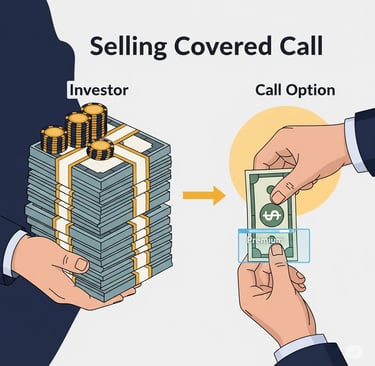
Selling a covered call is a popular strategy for income generation, often used by investors who already own the underlying stock. It's called "covered" because you own the shares to "cover" your obligation if the option is exercised.
What it is: You own at least 100 shares of a stock, and you sell (write) a call option against those shares. You collect the premium upfront.
When to use it (Market View): You are neutral to mildly bullish on the stock you own, or you don't mind selling your shares at the strike price if the stock goes up. You want to generate extra income from your existing stock holdings.
Why use it?
Income: You collect the premium immediately, which can enhance your returns or provide income in a sideways market.
Partial Downside Protection: The premium received offers a small buffer against a slight decline in the stock's price.
Selling Covered Calls: Generating Income (Covered Call)
Risk and Reward Profile:
Maximum Risk: The potential loss on your stock holdings if the stock price drops below your purchase price (minus the premium received). Your stock can still go to $0.
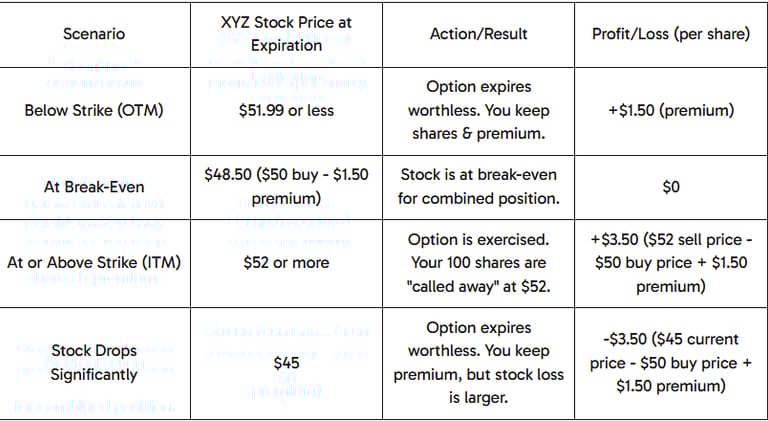
Maximum Reward: Limited to the premium received + (Strike Price - Stock Purchase Price). If the stock goes far above the strike, you miss out on further gains beyond the strike price, as your shares will be "called away" (exercised).
Break-Even Point: Stock Purchase Price - Premium Received
Example: Selling a Covered Call
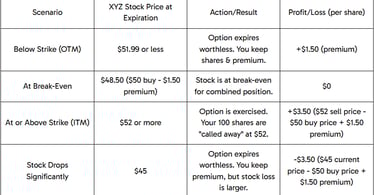
Let's say you own 100 shares of XYZ stock that you bought at $50 per share. XYZ is currently trading at $50. You don't expect a huge move in the next month, but you're happy to collect some income.
You sell 1 XYZ $52 Call option expiring in 1 month for a premium of $1.50 per share (total collected: $1.50 x 100 shares = $150).
Important Considerations for Selling Covered Calls:
Opportunity Cost: You give up potential large gains if the stock skyrockets past your strike price. Your shares will be called away at the strike.
Time Decay: This is working for you. You want the option to lose time value and expire worthless so you keep the premium.
Selling NAKED Calls: Never to be confused with covered calls for beginners. Selling a call without owning the underlying stock is called a "naked call" and carries unlimited risk. This is generally not allowed for Level 1 or 2 options accounts and is highly risky.
Selling a covered call is a popular strategy for income generation, often used by investors who already own the underlying stock. It's called "covered" because you own the shares to "cover" your obligation if the option is exercised.
What it is: You own at least 100 shares of a stock, and you sell (write) a call option against those shares. You collect the premium upfront.
When to use it (Market View): You are neutral to mildly bullish on the stock you own, or you don't mind selling your shares at the strike price if the stock goes up. You want to generate extra income from your existing stock holdings.
Why use it?
Income: You collect the premium immediately, which can enhance your returns or provide income in a sideways market.
Partial Downside Protection: The premium received offers a small buffer against a slight decline in the stock's price.
Selling Covered Calls: Generating Income (Covered Call)
Risk and Reward Profile:
Maximum Risk: The potential loss on your stock holdings if the stock price drops below your purchase price (minus the premium received). Your stock can still go to $0.
Maximum Reward: Limited to the premium received + (Strike Price - Stock Purchase Price). If the stock goes far above the strike, you miss out on further gains beyond the strike price, as your shares will be "called away" (exercised).
Break-Even Point: Stock Purchase Price - Premium Received
Example: Selling a Covered Call
Let's say you own 100 shares of XYZ stock that you bought at $50 per share. XYZ is currently trading at $50. You don't expect a huge move in the next month, but you're happy to collect some income.
You sell 1 XYZ $52 Call option expiring in 1 month for a premium of $1.50 per share (total collected: $1.50 x 100 shares = $150).
Important Considerations for Selling Covered Calls:
Opportunity Cost: You give up potential large gains if the stock skyrockets past your strike price. Your shares will be called away at the strike.
Time Decay: This is working for you. You want the option to lose time value and expire worthless so you keep the premium.
Selling NAKED Calls: Never to be confused with covered calls for beginners. Selling a call without owning the underlying stock is called a "naked call" and carries unlimited risk. This is generally not allowed for Level 1 or 2 options accounts and is highly risky.