

Section 3: Options Market Basics
How options are traded (exchanges, liquidity, etc.) - Options chains and how to read them - Bid/ask spread and market makers
BEGINNER LEVEL
10/6/202518 min read
You've grasped what options are and why they can be powerful tools. Now, let's pull back the curtain and look at the real-world stage where all this action happens. How do you actually find, compare, and trade options? What do all those numbers mean on your screen?
Section 3: Options Market Basics
This section is your essential guide to navigating the options marketplace. We'll explore:
Where options are bought and sold.
How to read the comprehensive "options chain" – your menu of available contracts.
What defines the prices you see on your screen, including the important "bid-ask spread."
Get ready to understand the practical mechanics of the options world, preparing you to confidently use your trading platform.
1. How Options Are Traded: The Marketplace
Unlike directly buying shares of a company from that company (which is generally done through primary offerings), options are traded on specialized financial exchanges, much like stocks.
1.1 Options Exchanges
Options are traded on various options exchanges around the world. In the United States, for example, major options exchanges include:
Chicago Board Options Exchange (CBOE): One of the largest and oldest options exchanges.
Nasdaq Options Market (NOM)
NYSE Arca Options
Philadelphia Stock Exchange (PHLX)
These exchanges provide a regulated marketplace where buyers and sellers can meet and trade options contracts. They ensure fair and orderly trading by setting rules and facilitating price discovery.


1.2 The Role of Your Brokerage Account
As an individual trader, you don't directly access these exchanges. Instead, you open an options trading account with a brokerage firm (like Charles Schwab, Fidelity, Interactive Brokers, Robinhood, Tastytrade, etc.). Your brokerage firm acts as an intermediary, sending your buy and sell orders to the options exchanges on your behalf.
Permissions: Be aware that trading options often requires specific permissions from your brokerage due to the leverage and risks involved. You'll usually need to apply for and be approved for certain "options trading levels," which dictate which strategies you're allowed to use.
1.2.1 Types of Brokerage Accounts and Options Trading Levels
Before you can start trading options, you'll need to open an account with a brokerage firm and typically get approved for specific "options trading levels." Brokers do this to ensure that traders understand the risks involved with different options strategies.
Here are the common types of accounts and the progressive levels of options trading permissions:
a) Account Types:
Cash Account:
Definition: This is the simplest type of brokerage account. You can only trade with the money you have deposited (your "cash balance"). You cannot borrow money from the broker (use "margin").
Options Use: In a cash account, you can typically buy options (long calls or long puts), as your maximum risk is limited to the premium paid, which is covered by your cash balance. You generally cannot sell naked options or use more complex strategies that require borrowing or might lead to unlimited risk, as these would require margin.
Requirements: Usually minimal; simply funding the account with cash.
Margin Account:
Definition: This account allows you to borrow money from your brokerage firm to buy securities. This borrowed money is called "margin," and it effectively allows you to control more assets than your cash balance would permit. You also typically need a margin account to short sell stocks.
Options Use: A margin account is usually required for selling options (short calls or short puts), especially for "naked" options where potential losses can exceed the premium received. It's also necessary for certain advanced strategies like spreads, where you might have both long and short option positions.
Requirements: Generally higher minimum deposit requirements (often $2,000 or more, though this can vary by broker) and a more detailed application process where the broker assesses your financial situation and trading experience. You must also understand and agree to the terms of borrowing on margin.
Retirement Accounts (e.g., IRA, 401k through a broker):
Definition: These are tax-advantaged accounts designed for retirement savings.
Options Use: Trading options within retirement accounts is generally more restricted than in taxable brokerage accounts. Brokers often limit you to very conservative options strategies, primarily covered calls (if you own the underlying stock) and buying puts for portfolio protection. Selling naked options or using strategies with unlimited risk is typically not allowed due to regulatory guidelines designed to protect retirement savings.
Requirements: Specific to retirement account rules and tax regulations.
b) Options Trading Levels (Common Brokerage Classifications):
Most brokers categorize options trading into levels, with each level allowing for progressively more complex and higher-risk strategies. You'll typically need to apply for and be approved for these levels based on your stated experience, financial situation, and trading objectives.
Level 1 (Basic Options Buying):
Allowed Strategies: Primarily allows you to buy long calls and long puts.
Purpose: Speculation on price movement, or basic hedging (like buying protective puts).
Risk Profile: Defined and limited to the premium paid.
Typical Account: Can often be done in a cash account.
Level 2 (Basic Options Selling & Spreads):
Allowed Strategies: Includes Level 1, plus selling covered calls (where you own the underlying stock), and potentially buying simple vertical spreads (like bull call spreads, bear put spreads).
Purpose: Income generation (covered calls), defined-risk directional bets.
Risk Profile: Defined risk (for spreads), or limited risk (for covered calls if stock is assigned).
Typical Account: Usually requires a margin account.
Level 3 (Advanced Spreads & Naked Puts):
Allowed Strategies: Includes Level 2, plus more complex spreads (e.g., butterflies, condors), and selling naked (uncovered) puts.
Purpose: More sophisticated income generation, volatility strategies, range-bound trading.
Risk Profile: Selling naked puts carries substantial risk (stock can go to zero), though losses are defined for multi-leg spread strategies.
Typical Account: Requires a margin account, and usually more stringent experience requirements.
Level 4 (Naked Calls & Most Complex Strategies):
Allowed Strategies: Includes Level 3, plus selling naked (uncovered) calls, and potentially options on futures or other derivatives.
Purpose: Highly sophisticated strategies, often used by professional traders.
Risk Profile: Selling naked calls carries unlimited risk and is the highest risk options strategy for retail traders.
Typical Account: Requires a margin account, and often the highest level of financial qualification and experience.
Important Note: The specific names and exact strategies allowed at each level can vary slightly between brokerage firms. Always check your broker's specific requirements and ensure you fully understand the risks of any strategy before you execute it. It's often recommended to start with Level 1 or 2 strategies and gain significant experience before attempting higher-level trading.
1.3 Electronic Trading and Liquidity
Today, almost all options trading is done electronically, which makes transactions incredibly fast.
Electronic Order Books: When you place an order, it enters an electronic order book where it matches with a corresponding buy or sell order.
Liquidity: This refers to how easily an option contract can be bought or sold without significantly affecting its price.
High Liquidity: Means there are many buyers and sellers actively trading that option. This typically results in tight bid-ask spreads (which we'll discuss soon) and makes it easier to enter and exit positions at a fair price. Actively traded stocks usually have highly liquid options.
Low Liquidity: Means there are fewer buyers and sellers. This can lead to wider bid-ask spreads, making it more challenging to get a good price, and you might have to wait longer for your order to be filled. Options on less popular stocks or with unusual strike prices/expiration dates often have lower liquidity.
2. Options Chains: Your Map to the Market
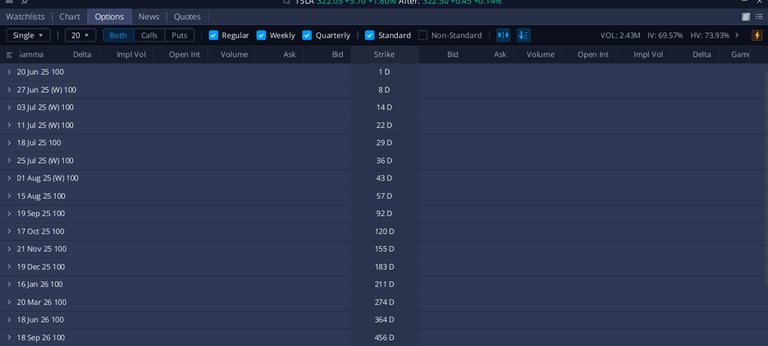
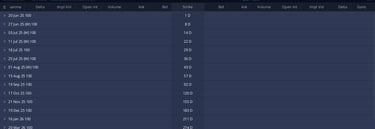
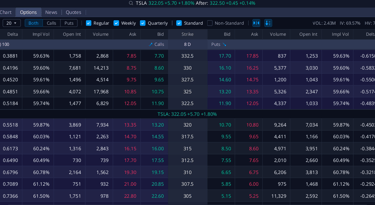
When you look up options for a specific stock on your brokerage platform, you'll see something called an "Options Chain" (sometimes called an "Options Matrix"). This is your primary tool for seeing all the available options contracts for an underlying asset.
Think of an options chain as a detailed menu that lists:
All available expiration dates for calls and puts.
All available strike prices for each expiration date.
Real-time pricing information (bid, ask, last traded price, volume, open interest) for each specific call and put option.
Let's break down how to read a typical options chain:
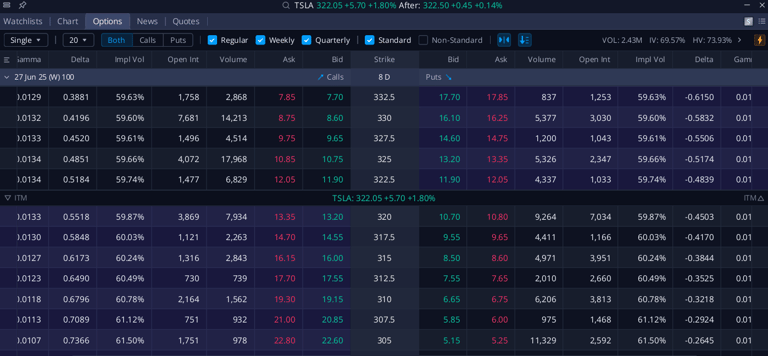
Key Elements of an Options Chain:
Expiration Date: Usually listed at the top, or you can select from a dropdown list. You'll see weekly, monthly, and sometimes even LEAPS (Long-term Equity Anticipation Securities) options.
Strike Price: Listed vertically down the middle. These are the predetermined prices at which the option can be exercised.
Calls Section: All the information for Call options for each strike price and expiration date.
Puts Section: All the information for Put options for each strike price and expiration date.
Inside each Call/Put section, you'll find:
Last (Last Traded Price): The price at which the option contract most recently traded.
Bid: The highest price a buyer is currently willing to pay for that option.
Ask (or Offer): The lowest price a seller is currently willing to accept for that option.
Vol (Volume): The number of contracts that have been traded for that specific option during the current trading day. High volume indicates active trading.
Open Int (Open Interest): The total number of option contracts that are currently "open" or outstanding (have not yet been closed, exercised, or expired). High open interest suggests significant institutional or professional interest in that option.

Moneyness (and how to spot it on the chain):
You'll often see the options chain visually highlight which options are In-the-Money (ITM), At-the-Money (ATM), and Out-of-the-Money (OTM).
Calls:
ITM Call: Strike price is below the current stock price. (e.g., if stock is $188, the $185 and $180 calls are ITM). These have intrinsic value.
ATM Call: Strike price is at or very near the current stock price. (e.g., the $190 call is close to ATM).
OTM Call: Strike price is above the current stock price. (e.g., the $195 and higher calls are OTM). These only have extrinsic (time) value.
Puts:
ITM Put: Strike price is above the current stock price. (e.g., if stock is $188, the $190 and $195 puts are ITM). These have intrinsic value.
ATM Put: Strike price is at or very near the current stock price. (e.g., the $185 put is close to ATM).
OTM Put: Strike price is below the current stock price. (e.g., the $180 and lower puts are OTM). These only have extrinsic (time) value.
Learning to read the options chain quickly is a fundamental skill for finding the right options for your strategies.
3. Bid-Ask Spread and Market Makers
When you look at an options chain, you'll notice that the "Bid" price is always lower than the "Ask" price. The difference between these two prices is called the Bid-Ask Spread.
Bid Price: This is the highest price that a buyer is currently willing to pay for the option. If you want to sell an option immediately, you'll typically sell it at the bid price.
Ask Price (or Offer Price): This is the lowest price that a seller is currently willing to accept for the option. If you want to buy an option immediately, you'll typically buy it at the ask price.


3.1 Understanding the Spread
Why it exists: The spread represents the difference between what buyers are willing to pay and what sellers are willing to accept. It's how market participants profit for facilitating trades.
Impact on You: As a retail trader, you always "lose" the spread when you immediately buy and then immediately sell (or vice-versa). You buy at the higher "ask" and sell at the lower "bid."
Tight vs. Wide Spreads:
Tight Spread: A small difference between bid and ask (e.g., $0.05). This indicates high liquidity and efficient pricing, making it easier to enter and exit trades without losing much to the spread.
Wide Spread: A large difference between bid and ask (e.g., $0.50 or more). This indicates lower liquidity, making it more expensive to trade and potentially harder to get your desired price.
3.2 Market Makers: The Facilitators of the Market
So, who is on the other side of these bids and asks, constantly willing to buy and sell? This is primarily the role of Market Makers.
What they do: Market makers are professional trading firms or individuals who stand ready to both buy and sell options contracts. They continuously quote both a bid and an ask price, providing liquidity to the market.
Their Goal: Their primary goal is to profit from the bid-ask spread. They buy at the bid and sell at the ask, aiming to execute many trades throughout the day to earn small profits on each. They don't necessarily care if the market goes up or down; they care about trading volume and the spread.
Risk Management: Market makers manage the risk of holding options inventory by continuously adjusting their prices and often hedging their positions with the underlying stock or other options.


Understanding the bid-ask spread and the role of market makers is important for ensuring you get fair prices for your trades and for understanding why an option's "Last" price might not always be exactly between the bid and ask. It also helps you appreciate why placing "limit orders" (which we'll discuss in a later section on trading platforms) is often preferable to "market orders" for options, especially those with wider spreads.
You've grasped what options are and why they can be powerful tools. Now, let's pull back the curtain and look at the real-world stage where all this action happens. How do you actually find, compare, and trade options? What do all those numbers mean on your screen?
Section 3: Options Market Basics
This section is your essential guide to navigating the options marketplace. We'll explore:
Where options are bought and sold.
How to read the comprehensive "options chain" – your menu of available contracts.
What defines the prices you see on your screen, including the important "bid-ask spread."
Get ready to understand the practical mechanics of the options world, preparing you to confidently use your trading platform.
Unlike directly buying shares of a company from that company (which is generally done through primary offerings), options are traded on specialized financial exchanges, much like stocks.
Options are traded on various options exchanges around the world. In the United States, for example, major options exchanges include:
Chicago Board Options Exchange (CBOE): One of the largest and oldest options exchanges.
Nasdaq Options Market (NOM)
NYSE Arca Options
Philadelphia Stock Exchange (PHLX)
These exchanges provide a regulated marketplace where buyers and sellers can meet and trade options contracts. They ensure fair and orderly trading by setting rules and facilitating price discovery.
As an individual trader, you don't directly access these exchanges. Instead, you open an options trading account with a brokerage firm (like Charles Schwab, Fidelity, Interactive Brokers, Robinhood, Tastytrade, etc.). Your brokerage firm acts as an intermediary, sending your buy and sell orders to the options exchanges on your behalf.
Before you can start trading options, you'll need to open an account with a brokerage firm and typically get approved for specific "options trading levels." Brokers do this to ensure that traders understand the risks involved with different options strategies.
Here are the common types of accounts and the progressive levels of options trading permissions:
a) Account Types:
Cash Account:
Definition: This is the simplest type of brokerage account. You can only trade with the money you have deposited (your "cash balance"). You cannot borrow money from the broker (use "margin").
Options Use: In a cash account, you can typically buy options (long calls or long puts), as your maximum risk is limited to the premium paid, which is covered by your cash balance. You generally cannot sell naked options or use more complex strategies that require borrowing or might lead to unlimited risk, as these would require margin.
Requirements: Usually minimal; simply funding the account with cash.
Margin Account:
Definition: This account allows you to borrow money from your brokerage firm to buy securities. This borrowed money is called "margin," and it effectively allows you to control more assets than your cash balance would permit. You also typically need a margin account to short sell stocks.
Options Use: A margin account is usually required for selling options (short calls or short puts), especially for "naked" options where potential losses can exceed the premium received. It's also necessary for certain advanced strategies like spreads, where you might have both long and short option positions.
Requirements: Generally higher minimum deposit requirements (often $2,000 or more, though this can vary by broker) and a more detailed application process where the broker assesses your financial situation and trading experience. You must also understand and agree to the terms of borrowing on margin.
Retirement Accounts (e.g., IRA, 401k through a broker):
Definition: These are tax-advantaged accounts designed for retirement savings.
Options Use: Trading options within retirement accounts is generally more restricted than in taxable brokerage accounts. Brokers often limit you to very conservative options strategies, primarily covered calls (if you own the underlying stock) and buying puts for portfolio protection. Selling naked options or using strategies with unlimited risk is typically not allowed due to regulatory guidelines designed to protect retirement savings.
Requirements: Specific to retirement account rules and tax regulations.
b) Options Trading Levels (Common Brokerage Classifications):
Most brokers categorize options trading into levels, with each level allowing for progressively more complex and higher-risk strategies. You'll typically need to apply for and be approved for these levels based on your stated experience, financial situation, and trading objectives.
Level 1 (Basic Options Buying):
Allowed Strategies: Primarily allows you to buy long calls and long puts.
Purpose: Speculation on price movement, or basic hedging (like buying protective puts).
Risk Profile: Defined and limited to the premium paid.
Typical Account: Can often be done in a cash account.
Level 2 (Basic Options Selling & Spreads):
Allowed Strategies: Includes Level 1, plus selling covered calls (where you own the underlying stock), and potentially buying simple vertical spreads (like bull call spreads, bear put spreads).
Purpose: Income generation (covered calls), defined-risk directional bets.
Risk Profile: Defined risk (for spreads), or limited risk (for covered calls if stock is assigned).
Typical Account: Usually requires a margin account.
Level 3 (Advanced Spreads & Naked Puts):
Allowed Strategies: Includes Level 2, plus more complex spreads (e.g., butterflies, condors), and selling naked (uncovered) puts.
Purpose: More sophisticated income generation, volatility strategies, range-bound trading.
Risk Profile: Selling naked puts carries substantial risk (stock can go to zero), though losses are defined for multi-leg spread strategies.
Typical Account: Requires a margin account, and usually more stringent experience requirements.
Level 4 (Naked Calls & Most Complex Strategies):
Allowed Strategies: Includes Level 3, plus selling naked (uncovered) calls, and potentially options on futures or other derivatives.
Purpose: Highly sophisticated strategies, often used by professional traders.
Risk Profile: Selling naked calls carries unlimited risk and is the highest risk options strategy for retail traders.
Typical Account: Requires a margin account, and often the highest level of financial qualification and experience.
Important Note: The specific names and exact strategies allowed at each level can vary slightly between brokerage firms. Always check your broker's specific requirements and ensure you fully understand the risks of any strategy before you execute it. It's often recommended to start with Level 1 or 2 strategies and gain significant experience before attempting higher-level trading.
Today, almost all options trading is done electronically, which makes transactions incredibly fast.
Electronic Order Books: When you place an order, it enters an electronic order book where it matches with a corresponding buy or sell order.
Liquidity: This refers to how easily an option contract can be bought or sold without significantly affecting its price.
High Liquidity: Means there are many buyers and sellers actively trading that option. This typically results in tight bid-ask spreads (which we'll discuss soon) and makes it easier to enter and exit positions at a fair price. Actively traded stocks usually have highly liquid options.
Low Liquidity: Means there are fewer buyers and sellers. This can lead to wider bid-ask spreads, making it more challenging to get a good price, and you might have to wait longer for your order to be filled. Options on less popular stocks or with unusual strike prices/expiration dates often have lower liquidity.
When you look up options for a specific stock on your brokerage platform, you'll see something called an "Options Chain" (sometimes called an "Options Matrix"). This is your primary tool for seeing all the available options contracts for an underlying asset.
Think of an options chain as a detailed menu that lists:
All available expiration dates for calls and puts.
All available strike prices for each expiration date.
Real-time pricing information (bid, ask, last traded price, volume, open interest) for each specific call and put option.
Let's break down how to read a typical options chain:
Key Elements of an Options Chain:
Expiration Date: Usually listed at the top, or you can select from a dropdown list. You'll see weekly, monthly, and sometimes even LEAPS (Long-term Equity Anticipation Securities) options.
Strike Price: Listed vertically down the middle. These are the predetermined prices at which the option can be exercised.
Calls Section: All the information for Call options for each strike price and expiration date.
Puts Section: All the information for Put options for each strike price and expiration date.
Inside each Call/Put section, you'll find:
Last (Last Traded Price): The price at which the option contract most recently traded.
Bid: The highest price a buyer is currently willing to pay for that option.
Ask (or Offer): The lowest price a seller is currently willing to accept for that option.
Vol (Volume): The number of contracts that have been traded for that specific option during the current trading day. High volume indicates active trading.
Open Int (Open Interest): The total number of option contracts that are currently "open" or outstanding (have not yet been closed, exercised, or expired). High open interest suggests significant institutional or professional interest in that option.
Moneyness (and how to spot it on the chain):
You'll often see the options chain visually highlight which options are In-the-Money (ITM), At-the-Money (ATM), and Out-of-the-Money (OTM).
Calls:
ITM Call: Strike price is below the current stock price. (e.g., if stock is $188, the $185 and $180 calls are ITM). These have intrinsic value.
ATM Call: Strike price is at or very near the current stock price. (e.g., the $190 call is close to ATM).
OTM Call: Strike price is above the current stock price. (e.g., the $195 and higher calls are OTM). These only have extrinsic (time) value.
Puts:
ITM Put: Strike price is above the current stock price. (e.g., if stock is $188, the $190 and $195 puts are ITM). These have intrinsic value.
ATM Put: Strike price is at or very near the current stock price. (e.g., the $185 put is close to ATM).
OTM Put: Strike price is below the current stock price. (e.g., the $180 and lower puts are OTM). These only have extrinsic (time) value.
Learning to read the options chain quickly is a fundamental skill for finding the right options for your strategies.
When you look at an options chain, you'll notice that the "Bid" price is always lower than the "Ask" price. The difference between these two prices is called the Bid-Ask Spread.
Bid Price: This is the highest price that a buyer is currently willing to pay for the option. If you want to sell an option immediately, you'll typically sell it at the bid price.
Ask Price (or Offer Price): This is the lowest price that a seller is currently willing to accept for the option. If you want to buy an option immediately, you'll typically buy it at the ask price.
Why it exists: The spread represents the difference between what buyers are willing to pay and what sellers are willing to accept. It's how market participants profit for facilitating trades.
Impact on You: As a retail trader, you always "lose" the spread when you immediately buy and then immediately sell (or vice-versa). You buy at the higher "ask" and sell at the lower "bid."
Tight vs. Wide Spreads:
Tight Spread: A small difference between bid and ask (e.g., $0.05). This indicates high liquidity and efficient pricing, making it easier to enter and exit trades without losing much to the spread.
Wide Spread: A large difference between bid and ask (e.g., $0.50 or more). This indicates lower liquidity, making it more expensive to trade and potentially harder to get your desired price.
So, who is on the other side of these bids and asks, constantly willing to buy and sell? This is primarily the role of Market Makers.
What they do: Market makers are professional trading firms or individuals who stand ready to both buy and sell options contracts. They continuously quote both a bid and an ask price, providing liquidity to the market.
Their Goal: Their primary goal is to profit from the bid-ask spread. They buy at the bid and sell at the ask, aiming to execute many trades throughout the day to earn small profits on each. They don't necessarily care if the market goes up or down; they care about trading volume and the spread.
Risk Management: Market makers manage the risk of holding options inventory by continuously adjusting their prices and often hedging their positions with the underlying stock or other options.

Understanding the bid-ask spread and the role of market makers is important for ensuring you get fair prices for your trades and for understanding why an option's "Last" price might not always be exactly between the bid and ask. It also helps you appreciate why placing "limit orders" (which we'll discuss in a later section on trading platforms) is often preferable to "market orders" for options, especially those with wider spreads.
3.1 How Options Are Traded: The Marketplace
3.1.1 Options Exchanges

3.1.2 The Role of Your Brokerage Account
Permissions: Be aware that trading options often requires specific permissions from your brokerage due to the leverage and risks involved. You'll usually need to apply for and be approved for certain "options trading levels," which dictate which strategies you're allowed to use.
3.1.2.1 Types of Brokerage Accounts and Options Trading Levels
3.1.3 Electronic Trading and Liquidity
3.2 Options Chains: Your Map to the Market
3.3 Bid-Ask Spread and Market Makers
